
CORTEX LLWAS
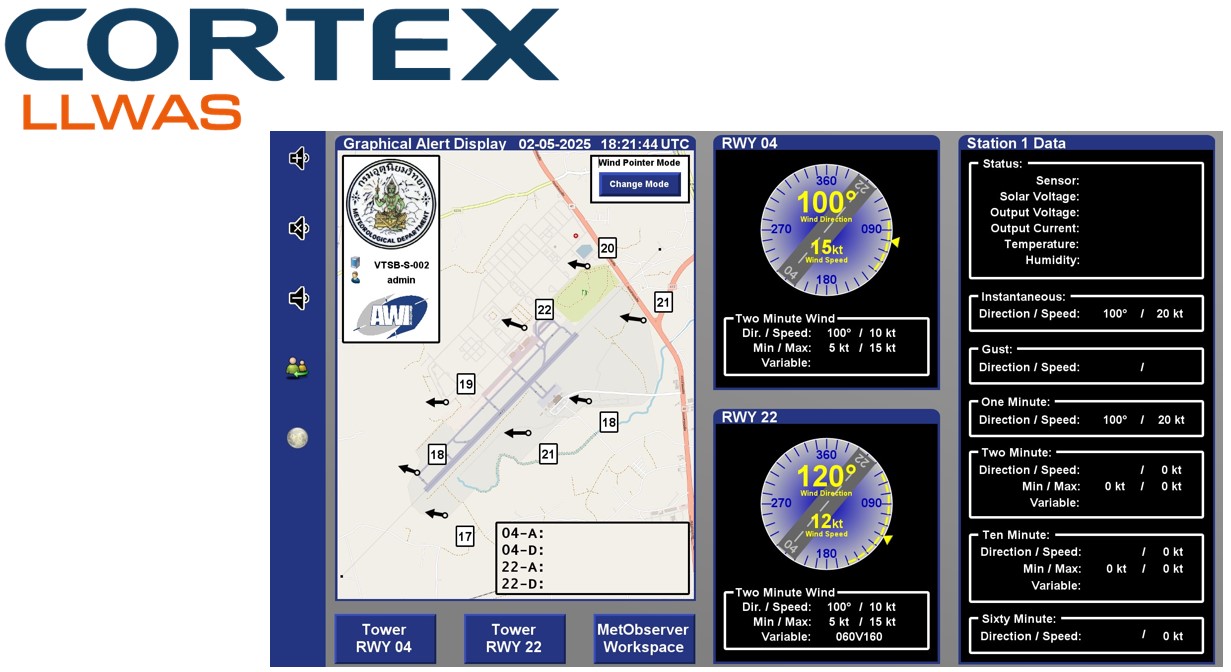
Low Level Windshear Alert System for real-time detection of windshear and microbursts, providing audible and visual ATC warnings with location, intensity and headwind-impact information for safer airport operations.
Typical Applications
- Airport low-level windshear monitoring
- Microburst detection
- Runway approach and departure safety
- Air Traffic Control weather alerting
- Multi-runway wind-monitoring networks
- Thunderstorm and convective weather operations
- Coastal airports affected by sea-breeze windshear
- Mountainous airports with terrain-induced windshear
Product Enquiry
CORTEX LLWAS
Low Level Windshear Alert System for real-time detection of windshear and microbursts, providing audible and visual ATC warnings with location, intensity and headwind-impact information for safer airport operations.
Typical Applications
- Airport low-level windshear monitoring
- Microburst detection
- Runway approach and departure safety
- Air Traffic Control weather alerting
- Multi-runway wind-monitoring networks
- Thunderstorm and convective weather operations
- Coastal airports affected by sea-breeze windshear
- Mountainous airports with terrain-induced windshear
The CORTEX LLWAS Low Level Windshear Alert System provides real-time detection and warning of windshear, microbursts, wind gusts and rapid wind-direction changes during critical aircraft takeoff and landing operations. Using the proven NCAR Phase III detection algorithm, the system analyzes data from distributed airport wind-monitoring stations and delivers immediate audible and visual alerts to Air Traffic Control (ATC), including information about the event’s location, intensity and operational headwind impact.
Key Features
- Real-time low-level windshear detection
- Microburst detection and warning
- Wind-gust and sudden-direction-change monitoring
- Proven NCAR Phase III detection algorithm
- Real-time audible ATC alerts
- Graphical visual alert display
- Event location and intensity information
- Headwind-impact assessment
- Configurable airport wind-sensor network
- Flexible multiple-runway coverage
- Single and redundant configurations
- ICAO and WMO recommendation compliance
- FAA-certified detection algorithms
- Designed around airport-specific terrain and runway geometry
Unlike a single wind sensor, LLWAS compares measurements across a distributed airport sensor network, enabling the system to identify dangerous localized wind changes and determine where a windshear or microburst event is affecting an aircraft’s approach or departure path.
Product Models
CORTEX LLWAS
- CORTEX LLWAS Low Level Windshear Alert System
- Real-time windshear and microburst detection
- Detects wind gusts and sudden wind-direction changes
- Uses proven NCAR Phase III detection algorithm
- Provides real-time audible and visual warnings to Air Traffic Control
- Reports windshear type and event location
- Provides event intensity information
- Provides operational headwind-impact information
- Flexible coverage for multiple airport runways
- Designed around runway configuration, terrain and local weather conditions
- Available in single or redundant system configurations
- Compliant with ICAO and WMO recommendations
- Uses FAA-certified windshear detection algorithms
- Designed for critical takeoff and landing safety monitoring
The CORTEX LLWAS Low Level Windshear Alert System provides real-time detection and warning of windshear, microbursts, wind gusts and rapid wind-direction changes during critical aircraft takeoff and landing operations. Using the proven NCAR Phase III detection algorithm, the system analyzes data from distributed airport wind-monitoring stations and delivers immediate audible and visual alerts to Air Traffic Control (ATC), including information about the event's location, intensity and operational headwind impact.
Key Features
- Real-time low-level windshear detection
- Microburst detection and warning
- Wind-gust and sudden-direction-change monitoring
- Proven NCAR Phase III detection algorithm
- Real-time audible ATC alerts
- Graphical visual alert display
- Event location and intensity information
- Headwind-impact assessment
- Configurable airport wind-sensor network
- Flexible multiple-runway coverage
- Single and redundant configurations
- ICAO and WMO recommendation compliance
- FAA-certified detection algorithms
- Designed around airport-specific terrain and runway geometry
Unlike a single wind sensor, LLWAS compares measurements across a distributed airport sensor network, enabling the system to identify dangerous localized wind changes and determine where a windshear or microburst event is affecting an aircraft's approach or departure path.
Additional information
| Models | CORTEX LLWAS |
|---|